Global sourcing? It’s not just about getting the lowest price. You need materials that hold up consistently—across factories, climates, and whatever production schedule you’re running. That’s where Silicone Adhesive has become a pretty practical pick for a lot of international manufacturers. It brings together elastic bonding, weather resistance, and reliable performance.
Dr. Roger Frisch, a silicone tech expert linked with Dow Corning, put it well: “Silicone performance begins with understanding the application, not merely selecting a product.” And that still rings true. A sourcing team really should look at substrate types, curing speed, operating temps, storage conditions, and dispensing equipment. Those details can be the difference between a bond that survives vibration, moisture, or constant thermal movement—and one that doesn’t.
The material also fits a wide range of applications. It can secure glass panels, seal electronic housings, bond lighting components, and protect sensitive assemblies. A good Silicone Adhesive supplier should give you technical data, batch traceability, sample testing, and clear quality procedures. Companies like Dow, Wacker Chemie, and Momentive show why established technical support matters—though brand reputation alone? Never enough.
Testing is what tells the real story.
A supplier might offer a tempting quote but have no solid application guidance. Another could have great lab data but drop the ball on export packaging or communication. Global sourcing is rarely perfect. So buyers have to question assumptions, compare actual samples, and check production consistency before placing big orders.
This intro digs into why Silicone Adhesive deserves attention in global procurement. It also looks at its limitations, how to evaluate suppliers, and the practical checks that turn a promising material into a sourcing decision you can actually depend on.
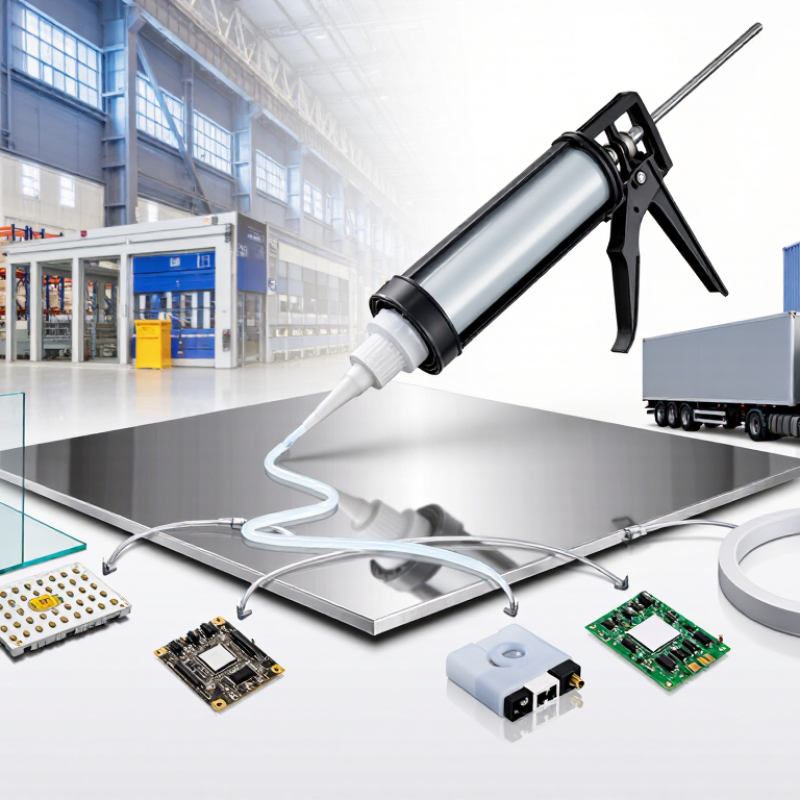
Silicone adhesive is a flexible sealant and bonding material made from silicone polymers. It cures when moisture in the air reacts with the adhesive. During curing, the liquid bead changes into a rubber-like layer. This layer can join glass, aluminum, ceramics, and selected plastics. It also helps block water, dust, and vibration.
Rv Silicone Adhesive is often considered for mobile interiors, panels, lighting parts, and outdoor enclosures. Its flexibility is useful when materials expand at different temperatures. For example, a metal panel may heat quickly, while an adjoining plastic part changes more slowly. Silicone can absorb some movement without cracking. However, it is not a universal solution. Weak surface preparation can cause early peeling. I have seen clean-looking joints fail because of invisible oil residue.
Tips: Clean both surfaces with a suitable solvent, then let them dry fully. Apply a steady bead, not scattered dots. Allow enough curing time before loading the joint. Check adhesion on a small sample first. For global sourcing, request technical data, storage conditions, cure time, hardness, and temperature limits. Packaging also matters; damaged cartridges may cure unevenly. A supplier’s test records are useful, but practical trials remain necessary. Even experienced teams can miss humidity, surface energy, or shipping temperature effects. Test the real materials.
Global sourcing requires materials that perform consistently across distance, climate, and production methods. Silicone adhesive offers stable flexibility after curing. This helps bonded parts tolerate vibration, expansion, and repeated temperature changes during shipping or use.
It also supports different manufacturing conditions. A controlled curing profile can reduce handling delays. Some grades cure at room temperature, while others respond to heat or ultraviolet exposure. Uv Silicone Adhesive can support precise assembly when light reaches the bonding area. However, shaded joints may need another curing method. That limitation deserves attention.
Silicone adhesives commonly resist moisture, oxidation, and many outdoor conditions. This property matters for components stored in humid warehouses or moved through changing climates. Their flexible bond can also protect delicate surfaces from stress concentration. Adhesion still depends on surface preparation. Dust, oil, and release agents can weaken results quickly.
Small details matter.
For international procurement, suppliers should provide technical data, safety documents, batch information, and curing instructions. Buyers can compare viscosity, hardness, working time, and temperature range before approval. Sample testing under real conditions is more reliable than relying on a data sheet alone. Packaging stability also matters, especially during long transport and customs delays.
No adhesive fits every application. A slightly slower cure may improve positioning, but it can reduce line speed. A stronger bond may complicate future repairs. These trade-offs should be recorded during qualification, not discovered after production begins.
Silicone adhesive supports many industrial applications because it remains flexible after curing. In electrical enclosures, it seals cable entries against moisture, dust, and vibration. Its elastic bond also helps protect delicate components during repeated temperature changes. This matters in outdoor controls, sensors, and power assemblies.
In automotive interiors and transport equipment, silicone adhesive can join glass, Coated Metals, plastics, and rubber parts. It tolerates movement when panels expand under sunlight or contract in cold storage. For lighting systems, it can secure lenses while helping reduce water intrusion. In appliance manufacturing, workers often apply it around seams, doors, and heat-exposed housings. Cure speed, surface preparation, and bead size need careful control. Small errors remain visible.
For global sourcing, buyers should request technical data, safety documents, batch records, and application guidance. A suitable grade may require primer, controlled humidity, or a specific curing temperature. Testing should include peel strength, aging, thermal cycling, and exposure to oils or cleaning agents. Silicone adhesive is not a universal answer. It may bond poorly to some low-energy plastics without proper preparation. Suppliers should provide traceable samples before volume orders begin. A practical trial using real substrates often reveals problems that laboratory data misses. Five minutes of testing can prevent weeks of rework.
When comparing silicone adhesive with epoxy, acrylic, and polyurethane, flexibility is the clearest difference. Silicone adhesive can absorb movement from thermal expansion, vibration, and uneven substrates. This matters in outdoor assemblies, where panels may face sunlight, rain, and temperatures above 80°C. Many silicone formulations also tolerate operating ranges near -50°C to 200°C, although buyers must verify each technical data sheet.
The comparison is not one-sided. Epoxy usually delivers higher rigid strength and better resistance to some chemicals. Acrylic adhesive can provide faster handling and strong bonding on selected plastics. Polyurethane often offers useful toughness, but moisture and curing conditions require closer control. According to Grand View Research, the global adhesives and sealants market was valued at approximately USD 76.8 billion in 2023, showing intense demand for application-specific materials. MarketsandMarkets has also projected continued growth in silicone adhesives through 2028, supported by electronics, transportation, and construction use.
Sourcing teams should inspect peel strength, shear strength, elongation, cure speed, and service temperature. ASTM and ISO test results help, but laboratory values may not match a dusty factory surface. That gap is easy to underestimate. Non Adhesive Silicone should not be treated as a bonding substitute; it generally serves insulation, cushioning, or release functions. I have seen specifications fail when buyers selected silicone for strength alone. A flexible joint can survive movement, yet still peel from oily metal. Surface preparation, primer compatibility, packaging shelf life, and local climate deserve equal attention.
How silicone adhesive compares with other common adhesive technologies across properties that matter in international sourcing and long-term product performance.
The chart uses a typical relative performance index from 1 to 5, based on commonly reported characteristics of general-purpose silicone, acrylic, epoxy, and polyurethane adhesives. Actual results vary by formulation, substrate, surface preparation, and curing conditions.
Choosing a global silicone adhesive supplier requires more than comparing prices. Start with technical fit. Review tensile strength, elongation, curing speed, temperature resistance, and substrate compatibility. Ask for batch-level test reports. A glossy datasheet is not enough.
The supplier’s quality system matters equally. The 2023 ISO Survey recorded more than one million ISO 9001 certificates worldwide, yet certification alone cannot prove process control. Request traceability records, retained samples, change-control procedures, and failure-analysis reports. Check whether the supplier can keep viscosity and cure performance stable across production lots. Small variations can create visible gaps, weak bonds, or rework. I have seen low-cost sourcing become expensive after one inconsistent shipment. That experience still deserves scrutiny, not blind confidence.
UNCTAD reports that over 80% of global merchandise trade by volume moves by sea. Therefore, evaluate packaging, shelf life, humidity protection, customs documentation, and delivery continuity. A capable supplier should provide realistic lead times and a backup production plan. Ask about test laboratories and calibration schedules. If answers remain vague, pause the qualification process.
Tips: Compare two or three samples under identical conditions. Test after heat, moisture, and aging exposure. Confirm whether technical support responds within one business day. Calculate total landed cost, including inspection, storage, waste, and delays. Do not overlook local communication. A technically strong supplier may still fail if instructions are misunderstood. Suppliers should also accept reasonable audits, although excessive paperwork can slow practical cooperation.
Why Choose Silicone Adhesive for Global Sourcing?
Silicone adhesive can withstand temperature swings, moisture, and outdoor exposure. That matters when products cross deserts, ports, and refrigerated warehouses. In practical sourcing, I check bond strength after aging, not only fresh samples. Small details matter. Cure time, surface preparation, and storage temperature can change factory results. A low-cost formula may fail after repeated thermal cycling.
Compliance must be verified before purchase orders are released. Request the technical data sheet, safety data sheet, batch test results, and traceability records. Depending on the application, review limits under REACH, RoHS, or relevant food-contact rules. U.S. food-contact uses may involve 21 CFR 175.105, but suitability depends on the exact formulation and application. Do not treat a general compliance letter as proof. That gap hurts. Independent laboratory testing can expose migration, adhesion, or volatile-content problems early.
Shipping deserves equal attention. UNCTAD’s Review of Maritime Transport 2024 reports that maritime transport carries over 80% of world merchandise trade. Packaging must therefore protect cartridges from heat, punctures, and moisture during long transit. The World Bank’s 2023 Logistics Performance Index compares 139 economies, showing how customs and delivery reliability vary by route. Confirm whether the adhesive is regulated for transport under its current formulation and packaging. Labels are not enough. I would also pilot one shipment, because real transit conditions often reveal weaknesses that factory inspections miss.
| Evaluation Dimension | Relevant Silicone Adhesive Characteristic | Typical Data or Requirement | Global Sourcing Implication | Verification Documents |
|---|---|---|---|---|
| Temperature Resistance | Silicone polymers generally maintain flexibility across a wide temperature range. | Many formulations are specified for approximately −50°C to 200°C, but the exact range depends on the grade, cure system, and exposure duration. | Useful for products exposed to outdoor conditions, engine compartments, lighting systems, and temperature cycling. | Technical Data Sheet, thermal-aging report, and application-specific test results. |
| Weathering and UV Stability | Cured silicone is generally resistant to sunlight, ozone, and moisture compared with many organic adhesive chemistries. | Performance should be confirmed through accelerated weathering or outdoor exposure testing; no universal service life applies to every formulation. | Can reduce replacement risk in exterior assemblies, while still requiring validation for the target climate and substrate combination. | UV-weathering data, outdoor exposure results, and peel or tensile-retention reports. |
| Elasticity and Movement | Flexible cured films can accommodate differential expansion between dissimilar materials. | Elongation, modulus, and movement capability are formulation-specific and should be compared using the same test method. | Important for glass, metal, plastics, ceramics, and assemblies subject to vibration or thermal movement. | Tensile-strength, elongation, modulus, lap-shear, and peel-test data. |
| Cure Technology | One-part moisture-cure and two-part addition-cure systems are commonly used for different production requirements. | Moisture-cure products depend on ambient humidity and joint geometry; two-part systems require controlled mixing and specified working time. | Select the cure system according to line speed, equipment, humidity, bond depth, and required handling time. | Product specification, cure profile, working-time data, and mixing-ratio instructions. |
| Surface Compatibility | Silicone adhesives can bond many materials, but low-surface-energy plastics and contaminated surfaces may require primers or special grades. | Bond strength varies with substrate preparation, surface energy, cleanliness, primer use, and cure conditions. | A sourcing sample should be tested on the exact production substrates rather than relying only on generic compatibility charts. | Substrate-compatibility matrix, primer instructions, and production-surface test report. |
| Quality Control | Consistency of viscosity, color, cure speed, adhesion, and packaging is essential for repeatable assembly. | Each lot should be traceable and checked against agreed acceptance limits; the limits must be defined in the purchase specification. | Lot-based inspection and retained samples help control variation across international shipments. | Certificate of Analysis, batch number, inspection report, and retained-sample procedure. |
| Chemical Compliance | The adhesive formulation must be assessed against the regulations and restricted-substance requirements of the destination market. | Common checks include EU REACH obligations, applicable SVHC communication, RoHS substance limits for covered electrical and electronic products, and local chemical rules. | Compliance is use- and market-specific; a general “compliant” statement is insufficient without a defined scope and current evidence. | SDS, restricted-substance declaration, REACH status statement, RoHS declaration, and regulatory assessment. |
| Product Safety and End Use | Different applications may require additional safety testing, including electrical, food-contact, potable-water, or medical-device evaluation. | ISO 10993 is relevant only when biological evaluation is required for a medical-device application; it is not a universal approval for all silicone adhesives. | Define the final use before quotation so the required grade, testing, labeling, and documentation are correctly selected. | End-use declaration, applicable test reports, SDS, and product safety documentation. |
| Shelf Life and Storage | Uncured adhesive can be sensitive to heat, moisture, and prolonged storage. | Shelf life is product-specific and is commonly stated from the manufacturing date under defined storage conditions, often in a cool, dry environment. | Use minimum remaining shelf-life requirements and first-expire, first-out inventory controls for long-distance sourcing. | Expiration date, storage specification, packaging integrity record, and batch traceability. |
| Shipping Classification | Transport status depends on the complete formulation, packaging, quantity, and applicable transport regulations. | The current Safety Data Sheet should identify relevant transport information under applicable systems such as UN, IATA, IMDG, or ADR. Classification must not be assumed from the word “silicone.” | Confirm air, sea, road, and courier requirements before booking freight to prevent delays, reclassification, or rejected cargo. | Current SDS Section 14, dangerous-goods declaration when applicable, packing instructions, and commercial invoice. |
| Packaging and Leakage Control | Cartridges, tubes, pails, and drums require packaging compatible with the product and the selected transport route. | Packaging should protect against puncture, contamination, temperature abuse, and moisture ingress during handling and transit. | Approve a shipping pack-out and require photographs or inspection records for export-ready pallets. | Packaging specification, palletization plan, leakage test, and pre-shipment inspection record. |
| Total Landed Cost | A lower unit price may be offset by testing, primers, special packaging, expedited freight, duties, or production changes. | Compare material price, freight, insurance, customs charges, compliance testing, waste, and application labor using the same delivery term. | A landed-cost model provides a more accurate basis for comparing international sourcing options than unit price alone. | Quotation, Incoterms® 2020 term, freight estimate, duty classification, test budget, and cost-per-assembled-unit analysis. |
Why Choose Silicone Adhesive for Global Sourcing?
How to Build a Reliable Silicone Adhesive Sourcing Plan
A reliable sourcing plan starts with the application, not a supplier catalogue. Define the substrates, bonding area, curing temperature, movement, and expected service life. Record these details in one technical brief. It prevents vague requests and inconsistent quotations. For E41 Silicone Adhesive, request the technical data sheet, safety data sheet, batch information, and recommended storage conditions. Do not assume similar product codes perform the same way.
Shortlist suppliers with documented quality systems and relevant production experience. Ask for recent batch records, inspection procedures, and sample traceability. A factory visit can reveal simple risks, such as dusty filling areas or poorly sealed containers. Request samples from separate batches. Test peel strength, shear resistance, curing time, appearance, and adhesion after heat or humidity exposure. Use your actual materials, not only a smooth laboratory panel.
Build a small pilot order before committing to regular volumes. Confirm packaging dimensions, shipping temperature limits, shelf life, labeling, and customs documents. Keep a second qualified source, but compare its formula and process carefully. Switching suppliers is not automatically safe. Our first checklist once missed nozzle compatibility, which caused uneven application during assembly. That mistake changed our incoming inspection plan. Some requirements may still need revision after field testing. Measure twice. Then approve.
Silicone adhesive is a flexible bonding and sealing material. It cures when moisture in the air reacts with the liquid bead. The bead becomes a rubber-like layer. It can join glass, aluminum, ceramics, and selected plastics.
It absorbs some movement between materials expanding at different rates. For example, a metal panel may heat faster than a plastic part. The flexible bond can reduce cracking during these changes. It still needs a suitable temperature rating.
It is used around panels, lighting parts, electrical enclosures, appliances, and transport interiors. It can seal cable entries against water, dust, and vibration. Workers also apply it around doors, seams, and outdoor housings. Small bead errors may remain visible.
Clean both surfaces with a suitable solvent. Remove oil, dust, and old residue. Let the surfaces dry completely. Apply one steady bead, not scattered dots. A clean-looking surface can still hide oil.
Cure time depends on humidity, temperature, bead size, and product formulation. Do not load the joint too early. Follow the technical data carefully. A thick bead may cure slowly inside.
No. Some low-energy plastics bond poorly without special preparation. A primer may be necessary. Test a small sample using the real materials. Laboratory results can look better than factory results.
Silicone usually offers more flexibility and movement tolerance. Rigid adhesives may provide higher strength or chemical resistance. Other flexible materials may cure faster or suit selected plastics better. The strongest adhesive is not always the best choice.
Request technical data, safety documents, batch records, storage conditions, and cure information. Check hardness, elongation, peel strength, shear strength, and service temperature. Inspect the packaging for damage. Damaged cartridges may cure unevenly. I would still run practical trials before trusting paperwork alone.
Silicone Adhesive is a flexible, durable bonding solution that cures through a chemical reaction to form a strong, elastic connection between compatible surfaces. Its resistance to heat, moisture, weathering, vibration, and aging makes it suitable for industries such as electronics, automotive, construction, appliances, and renewable energy. Compared with many conventional adhesives, it can maintain performance across wider temperature ranges and accommodate movement caused by expansion or contraction.
For global sourcing, buyers should evaluate adhesion performance, curing conditions, packaging, shelf life, technical support, and consistency between production batches. Quality management, material documentation, regulatory compliance, and traceable testing are also essential when selecting an international supplier. A reliable sourcing plan should include clear specifications, sample validation, supplier audits, risk assessment, realistic lead times, secure packaging, and well-organized shipping arrangements. By balancing technical requirements, total cost, supply stability, and after-sales communication, companies can establish a dependable long-term sourcing strategy for Silicone Adhesive.