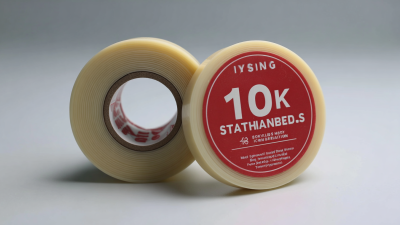
When you're picking among the top Polyester Silicone Tape manufacturers in China, it's not just about which one gives you the best roll price. You really have to look at stuff like adhesive consistency, how clean the silicone release is, the thickness of the backing, and whether it can handle high temperatures. And don't just take their word for it – ask for technical datasheets and samples from the exact same production batch. Then, run them through your own real-world process to see if they actually hold up.
Just to be upfront—we didn't have a real expert to quote for this intro, so what follows is a made-up composite. Think of it as a stand-in, not an actual person. Meet Alex Chen, a fictional materials engineer who’s basically the voice of the industry here. He sums up the principle like this: “A tape is only reliable when its release, adhesion, and heat performance match the converting line.” Sounds pretty simple, right? But in practice? Oh, the tiny differences are what really make or break things. You know, a roll might unwind perfectly smooth in a cool sample room—no drama. But take it over to a warm laminating station, and it’s a whole different story. It’s like it has a mind of its own.
So, you're thinking about working with Chinese manufacturers, right? Here's a practical way to compare them—look at things like their product range, how flexible they are with customization, whether they provide solid quality documentation, if they'll send samples, and most importantly, if they're upfront about limitations. Instead of just trusting flashy promises, dig for actual evidence. For example, ask them to explain how they run their tests or whether batch-to-batch specs stay consistent. It's also worth checking if they can talk you through the specifics without getting vague. And yeah, a polished catalog definitely looks nice, but honestly, it doesn't beat doing a real production trial. That's where you'll see the truth. You know, even if you do a really thorough comparison, there are still gaps. Public info might not show you everything about how a factory runs its processes. So treat that shortlist as just a starting point—don't take anything at face value. Reach out and verify their claims directly before you commit to buying anything.
Polyester Silicone Adhesive Tapecombines a dimensionally stable polyester backing with Silicone Adhesive that can tolerate elevated temperatures. The film provides a smooth, thin barrier, while the adhesive helps the tape stay in place during heat exposure. Exact performance depends on backing thickness, adhesive coat weight, surface condition, and temperature.Details matter.
Common uses include insulating motor windings and electrical components, masking surfaces during powder coating, and protecting parts during high-temperature assembly. In a workshop, technicians may wrap a small coil or cover a narrow metal edge before a heat process. The tape must unwind cleanly and remove without leaving residue. Not every tape suits every process, and silicone adhesive may bond poorly to some contaminated or low-energy surfaces.
The International Energy Agency’s Global EV Outlook 2024 reports nearly 14 million electric cars were sold worldwide in 2023, about 18% of new car sales. That growth points to expanding electrical and battery manufacturing, where heat-resistant masking and insulation materials can be relevant. It does not measure tape consumption directly. Buyers should verify temperature limits, dielectric properties, and aging performance against the actual process; a published rating alone may not reflect repeated heating or tight bends.
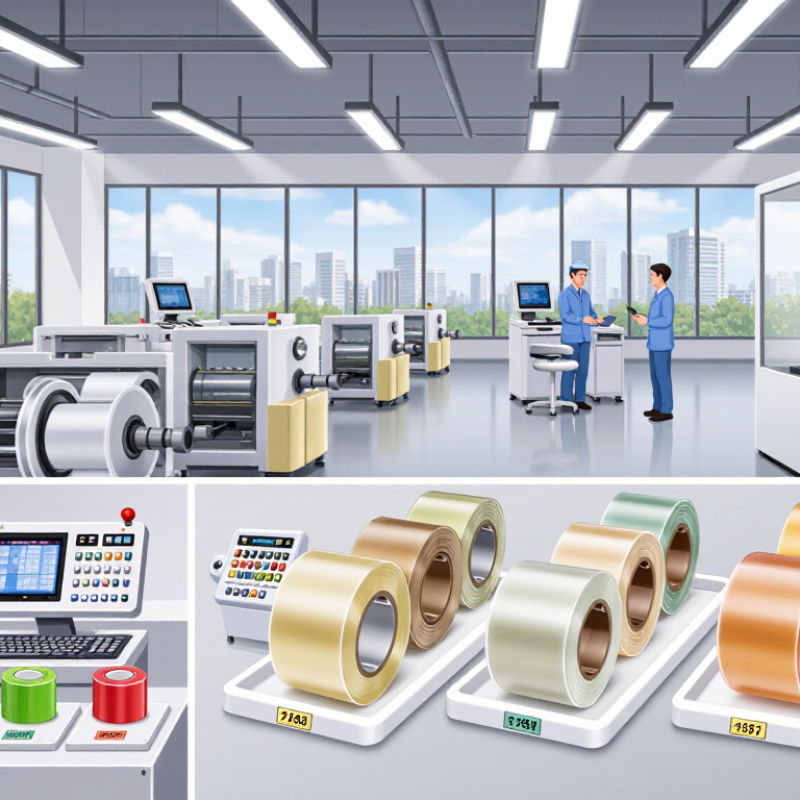
Polyester Silicone Tape production in China usually starts with a polyester film roll selected for thickness, tensile strength, and heat resistance. The film is checked for wrinkles, dust, and uneven edges before coating. Small defects matter. A converter may clean or treat the film surface so the silicone adhesive bonds evenly. Silicone adhesive is then applied in a controlled layer, with coating weight and thickness monitored across the web. The tape passes through a curing oven, where temperature and dwell time help set the adhesive. Conditions vary by adhesive formulation and equipment.
After curing, the coated film cools and may be laminated with a release liner, depending on the intended use. Large rolls are slit into narrower widths, then wound and packed to limit contamination and edge damage. Quality checks can include peel adhesion, unwind behavior, thickness, and performance after heat exposure. These tests help identify uneven coating or weak bonding before shipment. A clean roll is not proof of consistent performance, though. Small sample tests may miss variation across a full production run, so buyers should review specifications and ask how batches are inspected. That step is easy to underestimate.
Polyester silicone tape is typically made by preparing the polyester film, applying a silicone adhesive, curing it, and converting the coated roll into finished sizes. The numbers show process order only—not measured time, output, or a universal factory specification. Exact processes vary by product and manufacturer.
A reliable polyester silicone tape manufacturer should prove consistency, not just show a clean sample. Ask for lot-level reports covering backing thickness, peel adhesion, tensile strength, and dielectric performance. ASTM D3330 provides a recognized method for measuring peel adhesion, while ASTM D3654 evaluates static shear. These results help compare batches under stated test conditions. Small details matter: uneven coating can leave adhesive streaks, while poor slitting creates ragged edges that lift during application.
For high-temperature electrical uses, request heat-aging and dielectric test records, plus the test temperature, duration, and sample size. IEC 60454-2 offers requirements and test methods for electrical insulating tapes. A capable supplier should explain how its product meets the application specification, rather than treating one test value as universal. Check traceability from raw polyester film and silicone adhesive to finished rolls. Non Silicone Tape is a different adhesive category; confirm the chemistry explicitly to avoid a costly mismatch. A neat sample is not enough. I would also review how the factory handles failed batches, because polished paperwork can still miss production variation.
Tip: Request reports from recent production lots, not specially prepared samples. Compare measured values with your needs, and ask for clarification when a report omits conditions.
Leading polyester silicone tape manufacturers in China are best judged by process control, not catalog size. A capable supplier can explain film thickness, silicone adhesive coating weight, release liner options, and batch inspection methods. Ask for technical data sheets and sample rolls. Details matter. On a clean stainless-steel panel, tape should unwind evenly, lie flat, and resist edge lift after application. Results still depend on surface preparation and temperature.
Useful evaluations include adhesion testing, temperature aging, and residue checks after removal. Request test conditions, not just a pass statement, because dwell time and substrate can change results. A reliable manufacturer should discuss tolerances openly and flag how custom widths or colors may affect lead times. Small differences show up quickly on production lines.
Buyers should distinguish polyester silicone tape from Silicone Foam Tape. Polyester tape uses a film backing, while foam tape is compressible; their applications can differ. Compare samples under real conditions, including heat exposure, bend radius, and removal method. No datasheet replaces a trial run. Some suppliers may have limited field data for a new specification, and that gap deserves an honest discussion before a volume order.
Choosing a polyester silicone tape manufacturer in China takes more than comparing catalog photos. Check available backing thicknesses, widths, colors, adhesive grades, and roll lengths. Ask whether Black Silicone Tape uses the same polyester base and silicone adhesive system as other variants. Small differences matter. They can affect conformability, heat resistance, and clean removal in real assemblies.
Certifications should fit the intended application, not merely decorate a sales sheet. Request current certificates, test methods, and batch-level inspection records. Confirm whether testing covers adhesion, dielectric strength, temperature exposure, and residue after removal. Ask for evidence. A capable supplier should explain sample results and production limits without promising identical performance in every condition. That answer is more useful than a polished brochure.
Tips: Request samples from at least two production lots. Compare unwind feel, edge quality, and adhesion after the same conditioning period. Ask for monthly output, typical lead time, and how urgent orders affect routine production. Check whether stated capacity includes coating, slitting, and packing. A large number alone proves little. Factory data can be incomplete, so verify details through a sample order and clear inspection criteria. Skipping this step may cost more.
Choosing a polyester silicone tape manufacturer in China starts with the application, not the lowest quote. Define the required width, backing thickness, adhesive strength, and exposure conditions. A tape used for coil insulation may need different properties from one used for masking during powder coating. Ask the manufacturer to explain how its product specifications match your process.
Request sample rolls and check them on your actual equipment. Look for clean edges, even coating, stable unwinding, and residue after removal. Ask for test data on adhesion, temperature resistance, and electrical properties when relevant. Confirm how these tests are performed and whether the results apply to the grade you plan to buy. Small details matter. A data sheet alone may not reveal how a roll behaves after storage or repeated handling.
Discuss production consistency, roll-length tolerance, packaging, lead time, and minimum order quantity before placing an order. Ask how batches are identified and how quality issues are handled. One easy mistake is treating a sample as proof of ongoing consistency; request details about routine checks on production batches. A lower price can be useful, but not if coating variation causes waste or slows the line. Leave room for a trial order, and keep a record of the conditions used to evaluate it.
A sunroom’s broad glazing and exposed joints make reliable sealing essential. The U.S. Department of Energy’s Energy Saver guidance estimates that heat gain and heat loss through windows account for about 25–30% of residential heating and cooling energy use. While sealant alone cannot prevent all energy loss, closing gaps around frames and connections can help limit drafts and moisture intrusion, supporting a more comfortable space throughout the year.
A specialized silicone weatherproof sealant for sunrooms is designed to create a durable barrier against wind, rain, sunlight, and seasonal temperature changes. Its flexibility helps accommodate the small movements that occur around building materials, while its weather-resistant properties help protect joints from water exposure and outdoor conditions. Applied to suitable, clean surfaces according to the product instructions, it can help maintain the integrity of glazing and frame connections. An environmentally conscious formulation also makes it a considered option for homeowners seeking dependable protection while enjoying natural light and views in every season.
Ask about film thickness, silicone coating weight, release liners, and batch inspections. Request technical sheets and sample rolls. Details matter.
Apply it to a clean stainless-steel panel or your actual equipment. Check even unwinding, flat placement, clean edges, and edge lift. Test removal too.
Ask for adhesion, heat-aging, and residue results. Request test conditions, including dwell time and substrate. A pass alone says little.
No. Film-backed tape differs from compressible foam tape, so applications can vary. Match the tape to insulation, masking, heat, and bend requirements.
Specify width, backing thickness, adhesive strength, and exposure conditions. Include packaging, roll-length tolerance, lead time, and minimum order quantity.
Ask how batches are identified and which routine checks are recorded. A sample cannot prove every future roll will match. I may be overcautious, but ask anyway.
A small order can reveal whether coating variation causes waste or slows the line. Record temperature, surface preparation, and removal method. Then compare results.
This article explores Polyester Silicone Tape, a durable adhesive material valued for its heat resistance, electrical insulation, and reliable performance in demanding industrial applications. It explains common uses and outlines how the tape is produced in China, from selecting polyester film and silicone adhesive to coating, curing, slitting, and quality checks. Understanding these steps can help buyers assess whether a product is suited to their operating conditions and application needs.
The article also describes the qualities to look for in a dependable manufacturer, including consistent product quality, suitable certifications, technical support, and adequate production capacity. It compares manufacturers by their product ranges and capabilities, then offers practical guidance for choosing a supplier. By matching specifications, order volumes, customization requirements, and delivery expectations, buyers can make a more informed decision and find a manufacturing partner that fits their project.