Finding a supplier for Silicone Adhesive Dots that you can really trust? That's not just about comparing prices online, you know. I mean, as a global buyer, you need adhesion that's consistent, removal that's clean, and deliveries that actually happen when they say. So the right supplier should be clear about their materials, how they control the manufacturing process, and their quality testing – that's a big deal.
Alright, so when you're really getting into evaluating these adhesives, it all starts with getting your hands on samples. Don't just look at them—actually test them. You want to try them on all sorts of surfaces: glass, painted metal, plastic, paper, even something textured. And here's the trick: you've got to check how they feel right after you stick them, then test the peel strength, see if they leave residue, and don't forget to put them through heat and humidity. That's where the real truth comes out. Now, the supplier you're dealing with—they should be upfront about technical data, batch numbers, how they package it, and give you realistic lead times. Honestly, the small stuff matters way more than you'd think. I've seen rolls that look flawless during inspection, but give it a few weeks in a warm warehouse and they just fall apart. So yeah, don't be fooled by a pretty face.
Now, here's the thing: seasoned buyers don't just stop at price and quality. They go deeper—checking out production capacity, how much you can customize, and whether the communication is on point. So, you've got to ask: can you tweak the diameter, thickness, liner type, adhesive strength, or even the packing format? And here's a sneaky one—when they send you samples, are those from the actual production line or just a special trial batch? Because, trust me, samples can be deceiving. That little difference? It's worth paying attention to.
So, this guide is basically about what to look for when you're hunting down Silicone Adhesive dot suppliers that work globally. You know, it's not just about who's got the lowest price—you've got to think about things like consistency in their products, how solid their tech support is, whether they're actually set up to ship internationally, and if they're transparent about how they do business. A good supplier won't just tell you their stuff works everywhere—they'll be upfront about its limits. Honestly, no single supplier is perfect for every job. Like, a supplier that's great for lightweight signage might totally flop when you need something for heavy-duty industrial assembly. So, keep that in mind. You know, independent testing is still a big deal, especially when you're dealing with vibration, temperature swings, or stuff sitting in storage for months. And honestly, if you take the time to really compare your options, you'll avoid a lot of buying headaches and keep your supply decisions on firmer ground.
What Are Silicone Adhesive Dots and How Do They Work?
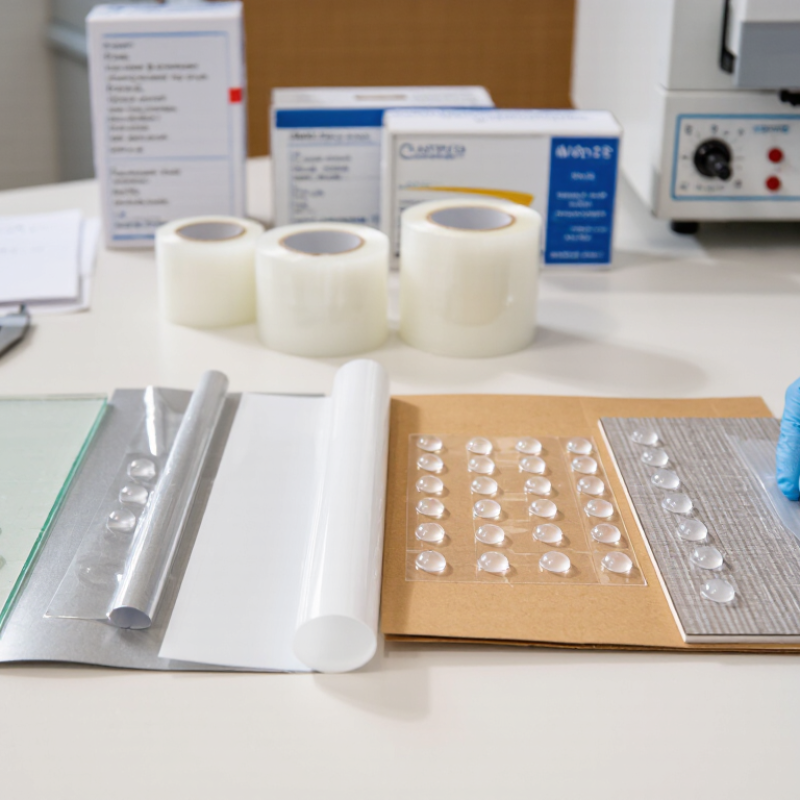
Silicone Adhesivedots are small, preformed bonding pieces made from pressure-sensitive silicone adhesive. They usually include a release liner for clean handling. When pressed onto glass, Coated Metals, plastics, or painted surfaces, the soft adhesive flows into microscopic surface irregularities. This creates intimate contact and stronger physical attachment. No liquid mixing is required. That matters on fast assembly lines.
Their performance depends on pressure, surface cleanliness, temperature, and contact time. Dust or oily residue can reduce adhesion sharply. A practical trial should compare peel strength, shear resistance, temperature cycling, and aging after humidity exposure. Silicone Adhesive Dots often perform well across wide temperature ranges, but they are not universal. Low-energy plastics may need special formulations or surface treatment.
Industry data supports growing demand for silicone-based bonding materials. Grand View Research reports that the global silicone adhesives market was valued at approximately USD 3.6 billion in 2023, with continued growth expected through 2030. Fortune Business Insights also identifies electronics, automotive, and construction as major application sectors. These reports cover silicone adhesives broadly, not dots alone. That distinction is important.
For global buyers, reliable suppliers should provide technical data sheets, batch traceability, liner specifications, and independent test results. Ask for samples first. Test the actual substrate, not a laboratory substitute. A dot that bonds firmly after ten minutes may fail after thermal cycling. Supplier claims need verification. Packaging also deserves attention, because humidity and heat can affect storage life.
Which Industries Use Silicone Adhesive Dots Most?
Silicone adhesive dots are widely used in electronics manufacturing, where small components need clean, controlled attachment. They secure light diffusers, display panels, cable guides, and protective covers. Their cushioning effect helps reduce vibration between delicate parts. In high-volume lines, consistent dot size also supports faster placement and fewer assembly adjustments.
The automotive industry uses them for interior trim, sensor covers, badges, and lightweight panels. Rv Silicone Adhesive can provide flexible bonding when surfaces expand at different temperatures. However, performance depends on surface cleanliness, pressure, and curing conditions. Dust can weaken the bond quickly. It happens more often than many specifications suggest.
Medical equipment makers use adhesive dots for labels, housings, and non-invasive device components. They usually check odor, residue, aging resistance, and material compatibility before approval. Furniture, lighting, signage, and home-appliance producers also value hidden fastening without visible screws. Global buyers should request test data from suppliers and inspect samples under real humidity and heat conditions. A perfect laboratory result may not represent a busy factory floor. Supplier reliability includes stable dimensions, clear technical documents, and responsive quality support.
How to Evaluate Silicone Adhesive Dot Suppliers
Choosing reliable silicone adhesive dot suppliers requires more than comparing prices. Global buyers should examine technical data, production consistency, and communication quality. Ask for samples made with the same material and curing process as regular orders. Test peel strength, shear resistance, surface compatibility, and aging under heat or moisture. For transparent applications, inspect cloudiness and edge lift after several days.
A qualified supplier should provide batch records, safety documents, storage guidance, and clear quality inspection procedures. Confirm whether the dots suit glass, metal, plastic, painted surfaces, or textured materials. For projects involving light exposure, ask for evidence from UV aging tests, especially when considering Uv Silicone Adhesive. Check packaging carefully too. Dots should arrive flat, clean, and protected from dust. Small defects can create expensive assembly delays. Yet no checklist is perfect. Real performance may change with a new substrate or warmer factory conditions.
Tips: Request a pilot order before signing a long-term agreement. Measure samples in your own production environment, not only in a supplier’s report. Compare delivery records, response times, and replacement policies. Ask practical questions. Can they maintain thickness tolerance? Can they explain a failed test without vague promises? An honest supplier may admit limitations, which is often more useful than polished marketing. Keep written specifications, approval samples, and inspection photos for future reference.
How to Evaluate Silicone Adhesive Dot Suppliers
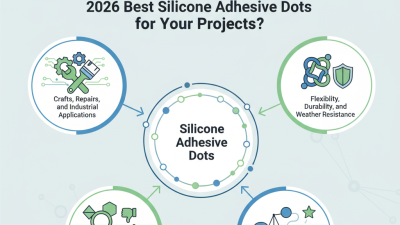
This evaluation framework uses a 100-point buyer scorecard for silicone adhesive dot suppliers. Product performance and quality consistency receive the highest weighting, followed by compliance, customization capability, delivery reliability, and commercial terms. Buyers should validate each score with technical data sheets, test reports, samples, audits, and documented quality records.
Top Supplier Regions for Global Silicone Adhesive Buyers
Top Silicone Adhesive Dots Suppliers for Global Buyers?
Asia-Pacific remains the strongest sourcing region for silicone adhesive dots. Grand View Research estimates that Asia-Pacific held over 40% of the global silicone adhesives market in 2023. China offers broad converting capacity and competitive tooling costs. Japan and South Korea often provide tighter process control and advanced liner technology. Taiwan is also useful for small, precise die-cut components. These differences matter when dots must survive heat, moisture, or repeated handling.
Europe and North America remain important for engineered, low-volume applications. Suppliers there often provide detailed technical files, batch traceability, and stronger support for regulated manufacturing. A 2024 market assessment by Fortune Business Insights projects steady growth in silicone adhesive demand through the decade, driven by electronics, automotive, and medical assembly. Buyers should not treat regional reputation as proof of quality. I have seen attractive samples fail during peel testing because storage conditions were ignored. That is an uncomfortable but common lesson.
Tips: Request samples from at least two regions. Compare peel strength, shear resistance, liner release, and aging results under identical conditions. Check ISO 9001 records, production tolerances, and lot-level inspection reports. Ask whether the adhesive dots are converted in-house. Freight costs may look minor, but humidity protection and customs delays can change the final price. A supplier with the lowest quotation is not always the lowest-risk choice.
What Quality Standards Should Suppliers Meet?
Top Silicone Adhesive Dots Suppliers for Global Buyers
Reliable suppliers should prove quality through records, testing, and repeatable production. In supplier audits, I look beyond a clean sample. A perfect-looking sample proves little.
Each batch should carry a traceable lot number, production date, material grade, and inspection record. Suppliers should provide certificates of analysis and safety data sheets. ISO 9001-based quality control is a useful foundation, but certification alone is not enough. Ask for peel strength, shear resistance, thickness tolerance, and aging results. Testing should reflect the buyer’s real application, including heat, humidity, dust, and storage time.
Material identification also matters. Silicone adhesive dots should not be confused with Non Adhesive Silicone parts. The adhesive layer, liner, and silicone substrate need separate specifications. For skin-contact applications, suppliers should provide relevant biocompatibility evidence, such as ISO 10993 testing where appropriate. For electronic or household uses, chemical restrictions and electrical performance may require additional documentation.
Good suppliers retain reference samples from each lot. They investigate complaints with written corrective actions, not vague promises. Packaging should prevent liner lifting, contamination, and deformation during shipment. I would also request production samples from more than one batch. Results can vary slightly, and suppliers may not disclose that clearly. That is a weakness worth examining. A small tolerance issue may become visible after thousands of applications. Reliable communication, honest limitations, and verifiable test data often matter more than attractive pricing.
How to Compare Pricing, Customization, and Delivery Options
Top Silicone Adhesive Dots Suppliers for Global Buyers?
Price comparisons should begin with the same specification. Dot diameter, thickness, silicone grade, liner type, and peel strength can change the quote significantly. A low unit price may exclude tooling, artwork, inspection, or export packing. According to Grand View Research, the global silicone adhesives market was valued at about USD 3.8 billion in 2023, with continued growth expected through 2030. That growth attracts more suppliers, but not every quotation deserves equal confidence.
Request a sample sheet and a full cost breakdown. Compare price per thousand dots, minimum order quantity, sample fees, tooling charges, and shipping terms. Ask whether the adhesive is suitable for glass, metal, painted surfaces, or plastics. Technical data sheets should show temperature resistance, aging performance, and recommended storage. I would also test three batches, not one. One batch can look perfect. That is not enough.
Customization often affects delivery more than buyers expect. Special shapes, colored liners, stronger tack, or tighter thickness limits may require new tooling and additional inspection. The 2024 MHI Annual Industry Report reported that 55% of supply-chain leaders were increasing technology investment, reflecting stronger pressure for visibility and faster response. Still, software cannot fix unclear specifications. Confirm production lead time, sample approval time, holiday shutdowns, and available shipping methods in writing. A supplier promising seven days may mean seven production days, excluding transit. That detail is easy to miss. Supplier audits, traceable batch records, and realistic delivery commitments matter more than a polished quotation.
Top Silicone Adhesive Dots Suppliers for Global Buyers? - How to Compare Pricing, Customization, and Delivery Options
| Supplier Profile | Common Product Range | Typical MOQ | Indicative Price
per 1,000 Dots | Customization Options | Sample Lead Time | Bulk Lead Time | Delivery Strength | Best Fit |
High-volume OEM manufacturer
East Asia production base | Round and square silicone adhesive dots; clear, white, black, and custom colors | 10,000–50,000 pcs | US$3.00–8.00
Depending on size, thickness, and adhesive grade | Die-cut shapes, custom diameter, liner material, packaging, color matching, private labeling | 5–10 days | 15–30 days | Competitive ocean and air freight; export packaging commonly available | Large orders |
Flexible customization supplier
Specialty converting operation | Low-profile silicone pads, custom-cut adhesive discs, transparent mounting dots | 5,000–20,000 pcs | US$5.00–14.00
Higher for complex shapes and low-volume runs | Custom tooling, unusual geometries, thickness from approximately 0.5–5 mm, printed liners, mixed pack sizes | 7–14 days | 20–35 days | Good support for prototype approvals and small customization projects | Custom projects |
Regional stock distributor
North American or European inventory model | Standard clear and black silicone dots in commonly used diameters and thicknesses | 500–5,000 pcs | US$12.00–30.00
Usually includes local handling and stock costs | Limited color and packaging changes; standard sizes typically ship without tooling | 1–5 business days | 1–10 business days | Fast domestic delivery, simplified customs process, and easier returns | Urgent orders |
Industrial-grade adhesive converter
Technical application focus | High-tack silicone adhesive dots for glass, metal, coated plastics, and appliance components | 20,000–100,000 pcs | US$8.00–22.00
Technical adhesive systems may increase cost | Adhesive selection, surface-specific testing, controlled thickness, technical documentation, batch traceability | 10–20 days | 30–50 days | Strong quality-control documentation and application testing; longer qualification cycle | Technical use |
Small-batch online supplier
Prototype and maker-market channel | Pre-cut transparent, white, and black dots for crafts, displays, electronics, and light assembly | 100–1,000 pcs | US$20.00–60.00
Small quantities typically carry a higher unit cost | Usually limited to standard sizes, colors, and pack quantities | 1–3 business days | 3–10 business days | Convenient parcel shipping, simple ordering, and low purchasing commitment | Prototypes |
Premium compliance-focused supplier
Regulated-market production model | Low-outgassing or application-qualified silicone adhesive dots for demanding environments | 25,000–100,000 pcs | US$15.00–40.00
Testing, documentation, and controlled production add cost | Material declarations, lot traceability, controlled packaging, performance testing, and customer-specific specifications | 15–25 days | 35–60 days | Suitable for buyers requiring documented quality systems and repeatable production controls | Compliance needs |
Comparison note: The figures above are indicative market benchmarks for preliminary sourcing comparisons. Final pricing depends on dot diameter, thickness, adhesive formulation, liner type, order quantity, packaging, testing requirements, Incoterms, and destination. Request a written quotation and production sample before placing a commercial order.
Weatherproof Silicone Sealants from China: Solutions Based on Grand View Research & Fortune Business Insights
Weatherproof silicone sealants from China are becoming a practical choice for construction, industrial, household, and automotive projects that require dependable protection against changing weather conditions. Designed to withstand rain, humidity, ultraviolet exposure, temperature fluctuations, and long-term outdoor use, these sealants form flexible and durable bonds on materials such as glass, aluminum, concrete, ceramic, and many common building surfaces. Their elasticity helps accommodate movement, reducing the risk of cracking or separation over time.
Manufactured in quality-controlled Chinese facilities, silicone sealants can be developed in different colors, curing speeds, packaging formats, and performance grades to suit diverse project requirements. Strong adhesion supports applications including window and door installation, façade joints, roofing details, sanitary areas, vehicle assembly, and general maintenance. Their smooth application and reliable curing performance also help improve work efficiency while maintaining a clean, professional finish. With consistent production standards and customization options, Chinese suppliers can provide weather-resistant sealing solutions for distributors, contractors, and project buyers seeking durability, flexibility, and stable performance.
FAQS
Request samples made with the same materials and curing process as regular orders. Test peel strength, shear resistance, surface compatibility, heat, and moisture aging. Use your own production line. Do not rely only on supplier reports. A clean sample proves little.
Each batch should include a lot number, production date, material grade, and inspection record. Ask for safety data sheets and certificates of analysis. Request written quality procedures and retained reference samples. Records should be easy to trace. If documents arrive vaguely, pause.
Test glass, metal, plastic, painted surfaces, and textured materials when relevant. Adhesion can change between smooth glass and dusty plastic. A dot that works on glass may lift from paint. Surface testing needs real production materials.
Measure peel strength, shear resistance, thickness tolerance, and aging performance. Include heat, humidity, dust, and storage-time conditions. For transparent uses, inspect cloudiness and edge lift after several days. Small edge lifting can stop assembly.
Compare identical diameter, thickness, silicone grade, liner type, and peel strength. Check unit price, minimum order quantity, sample fees, tooling, inspection, and shipping. A low quote may exclude export packing. Ask for a complete cost breakdown.
Confirm tooling time, sample approval time, production lead time, and shipping duration in writing. Special shapes, colored liners, and tighter tolerances may extend production. Clarify whether “seven days” means production days only. Delivery promises can be slippery.
Dots should arrive flat, clean, and protected from dust. Packaging should prevent liner lifting, contamination, and deformation. Inspect the outer carton and inner sheets immediately. Photograph defects before use. Small defects become expensive delays.
Be cautious when a supplier avoids failed-test explanations or cannot show batch records. Test more than one batch because results may vary slightly. A supplier admitting limitations may be more trustworthy. No checklist is perfect. Performance can change with warmer factories or new substrates.
Conclusion
Silicone Adhesive Dots are pre-cut bonding solutions made from silicone-based materials, offering reliable attachment, flexibility, temperature resistance, and clean application without liquid adhesives. They are widely used in electronics, automotive components, household products, signage, packaging, medical equipment, and industrial assembly. Their performance depends on surface compatibility, adhesive strength, durability, and resistance to heat, moisture, chemicals, and aging.
When selecting a supplier, global buyers should evaluate material consistency, production capacity, quality control, certifications, testing procedures, and technical support. Major supplier regions may offer different advantages in manufacturing expertise, logistics, customization, and cost efficiency. Buyers should compare product dimensions, adhesive grades, packaging, minimum order quantities, tooling requirements, lead times, shipping terms, and after-sales service. A dependable supplier should provide samples, clear specifications, stable pricing, flexible customization, and delivery plans that match the project’s quality and volume requirements.