


China Stone-Coated Metal Roofing Tiles – Architectural Art from Trusted Suppliers and Quality Factory
Product Features
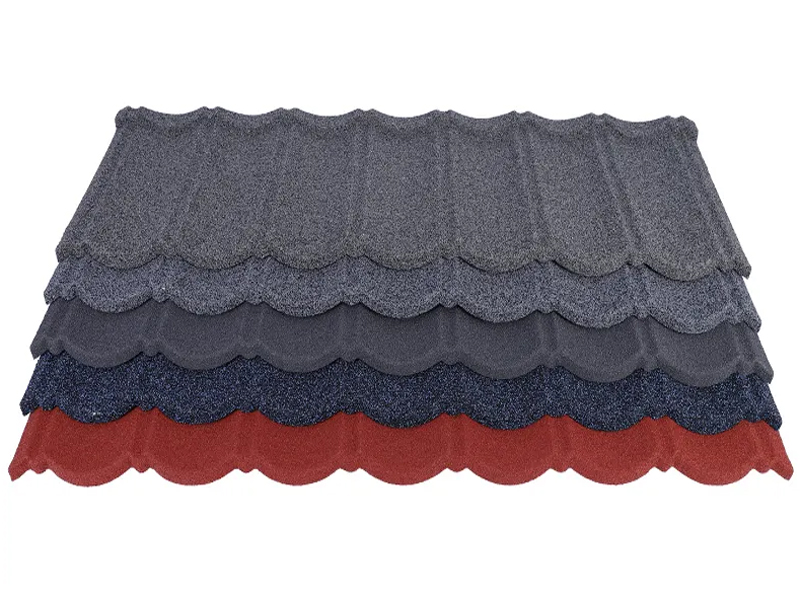
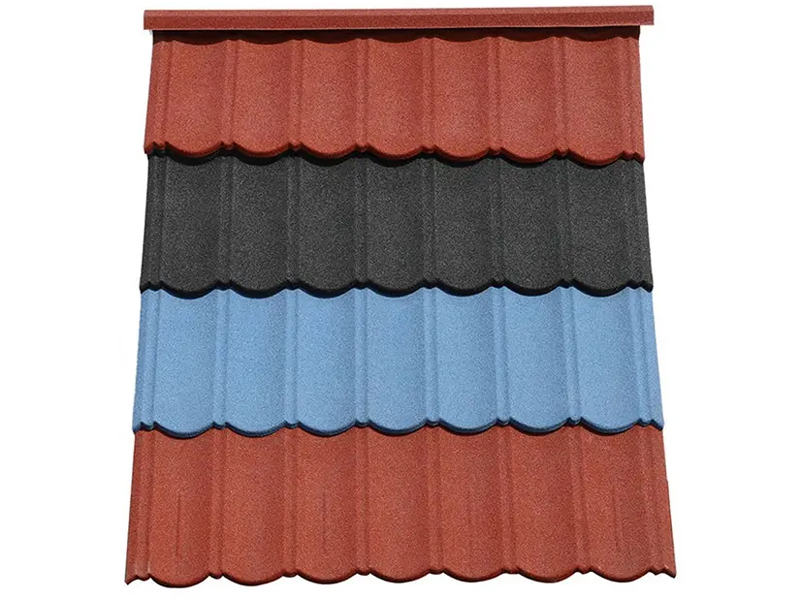
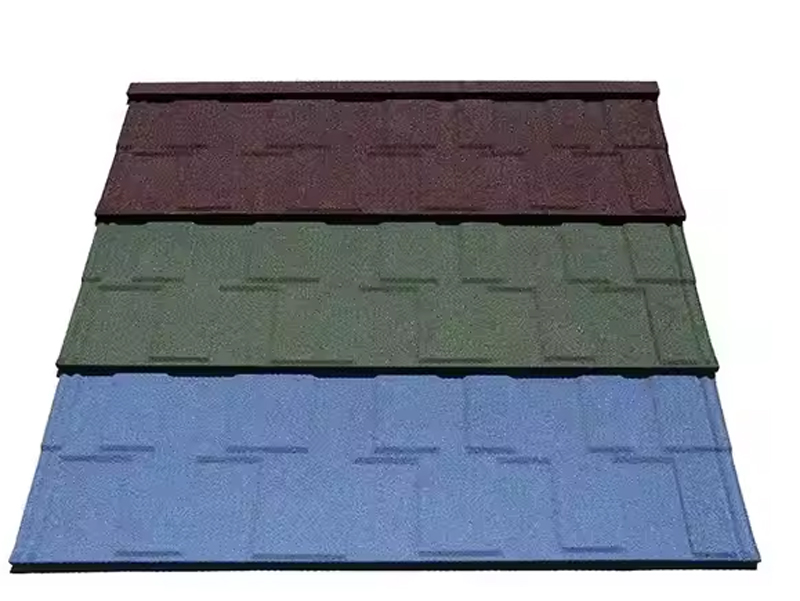
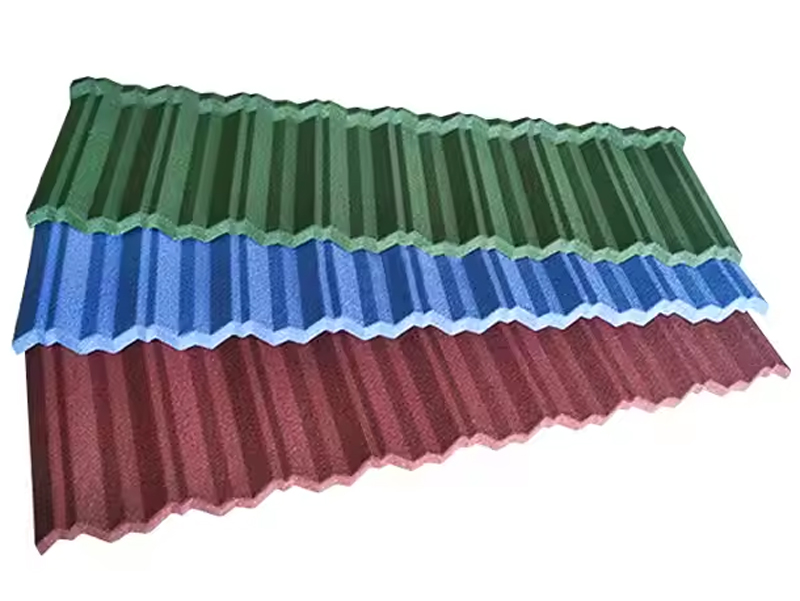
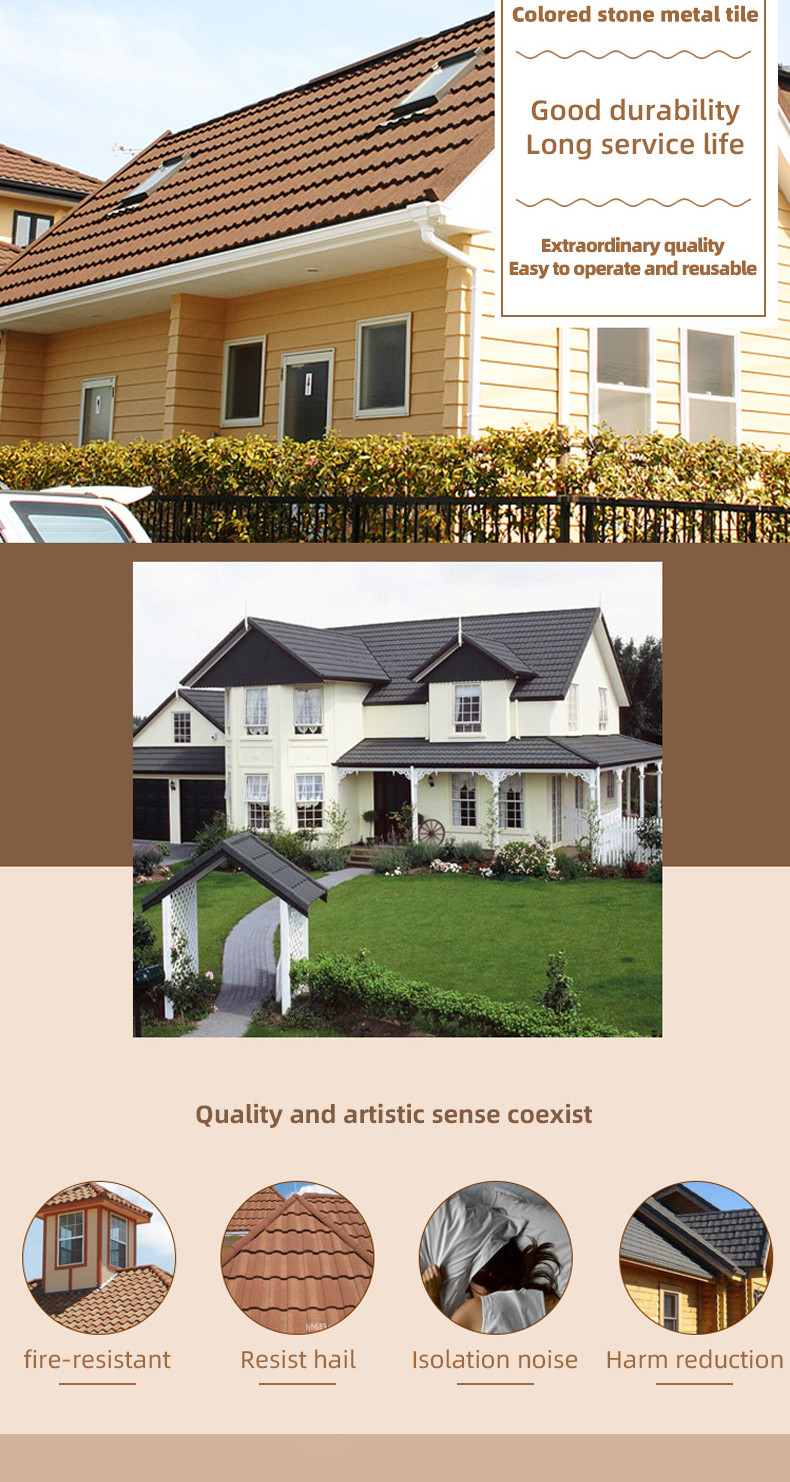
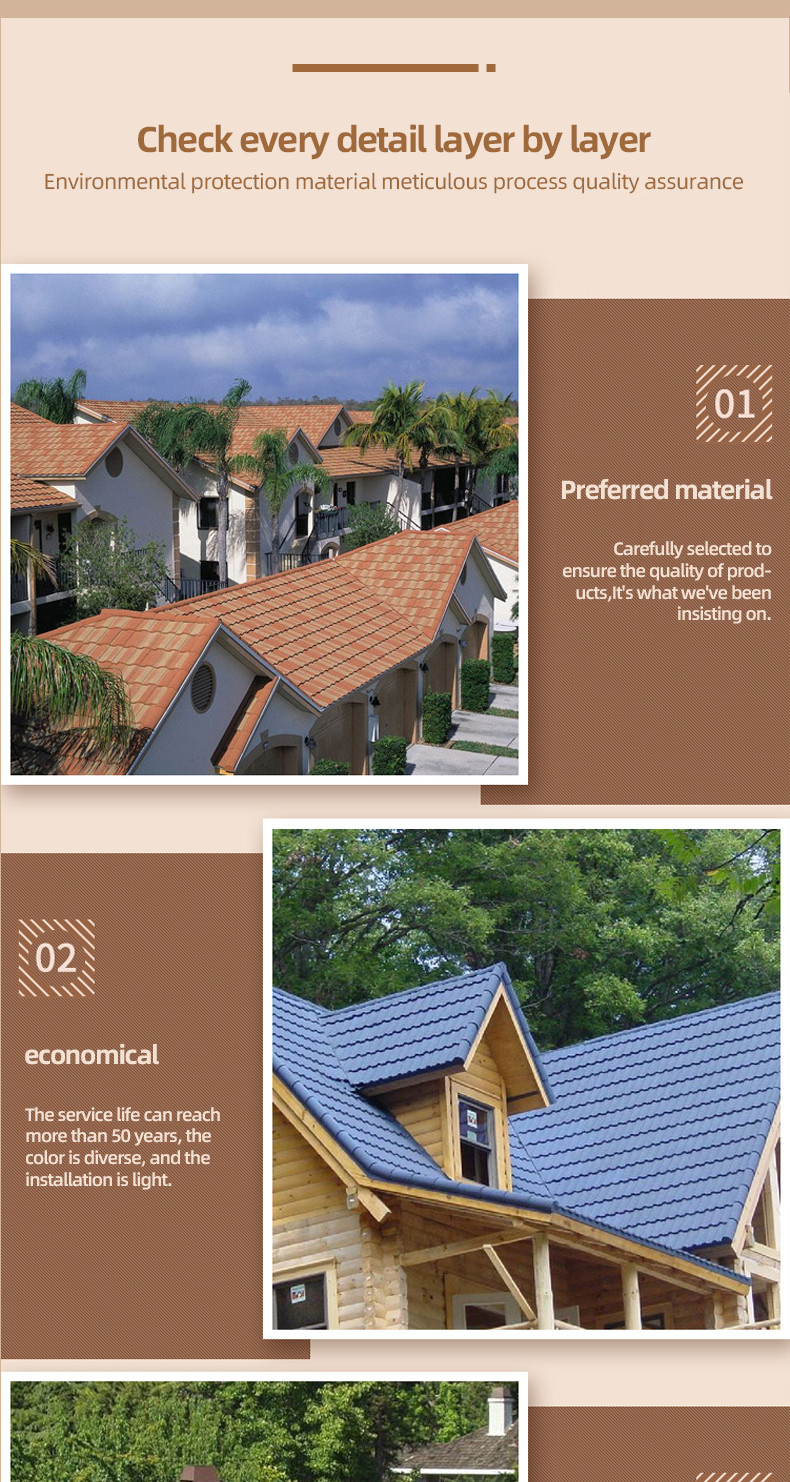
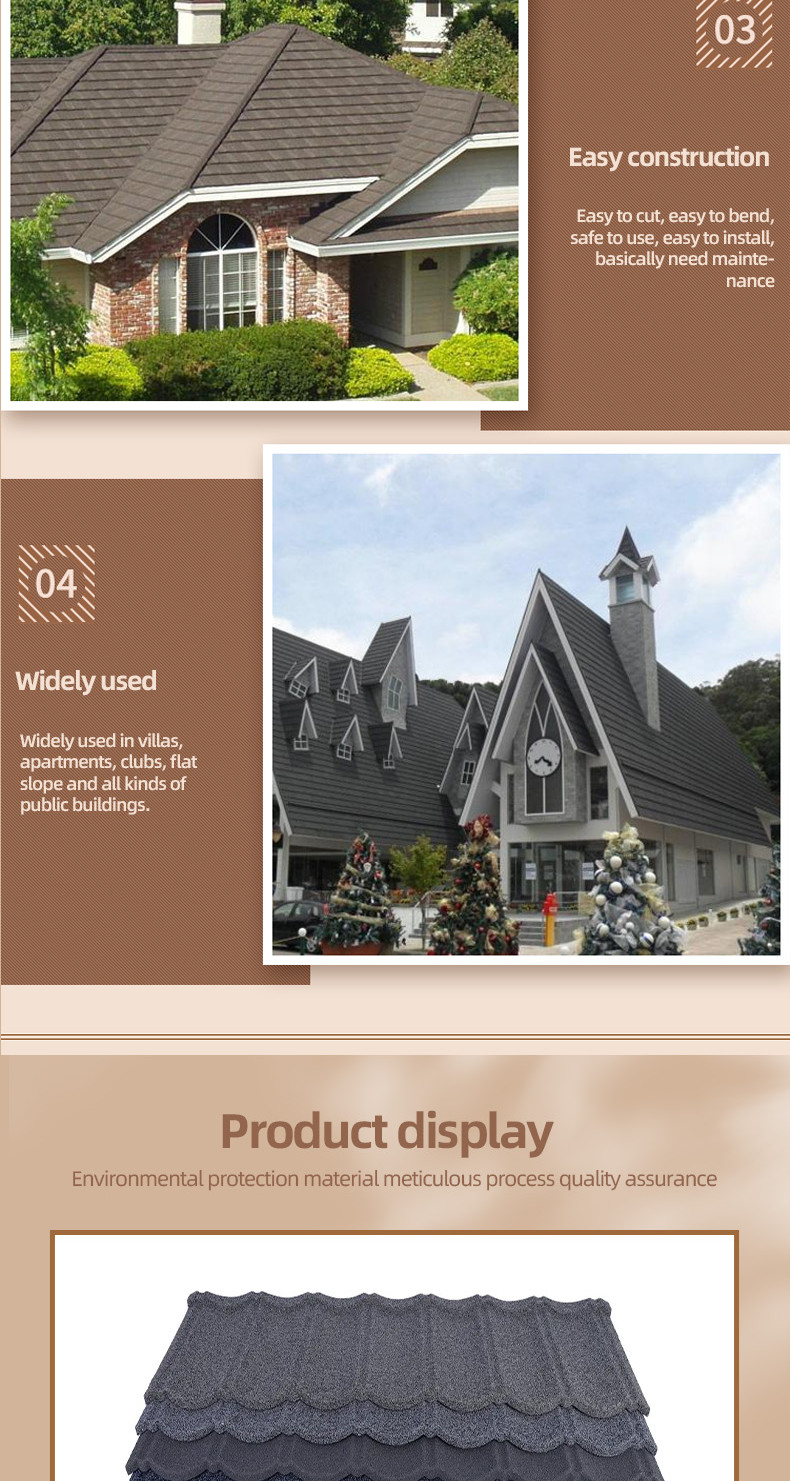
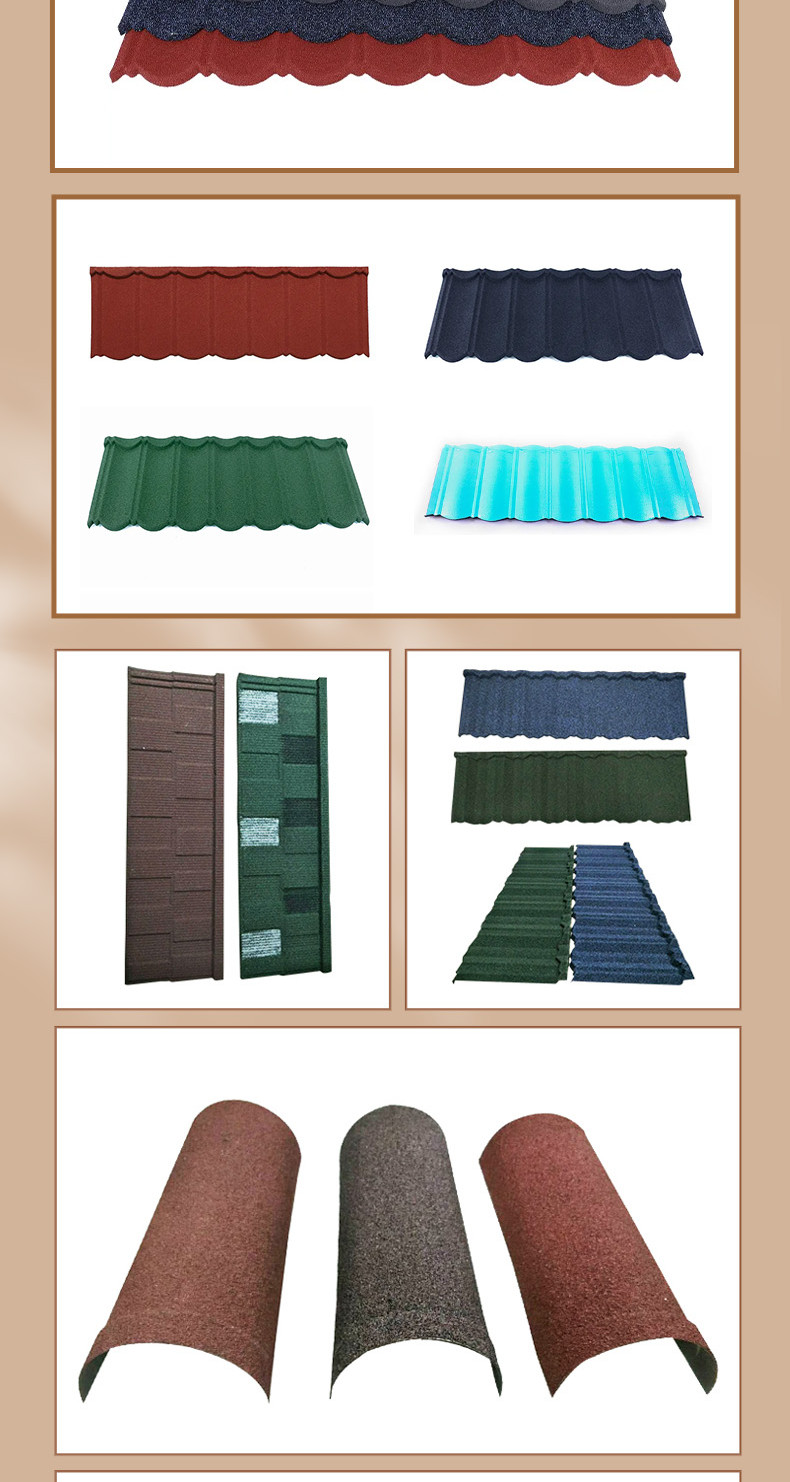
Stone-coated metal tiles use natural stone granules as the surface coating, replicating the authentic look of stone while retaining the robustness of metal. They resist fading under sun exposure and withstand hail and heavy rain, keeping the building looking pristine for years.
Traditional tiles are prone to dislodging during extreme weather like typhoons or earthquakes. In contrast, stone-coated metal tiles feature an interlocking design and high-strength metal base, offering wind resistance of up to Category 12 and excellent seismic performance, making them ideal for coastal and windy regions.
The tiles employ a 3D drainage structure with tight seams to prevent water infiltration. Their specially treated surface prevents water pooling and moss growth, maintaining a clean and attractive appearance over time.
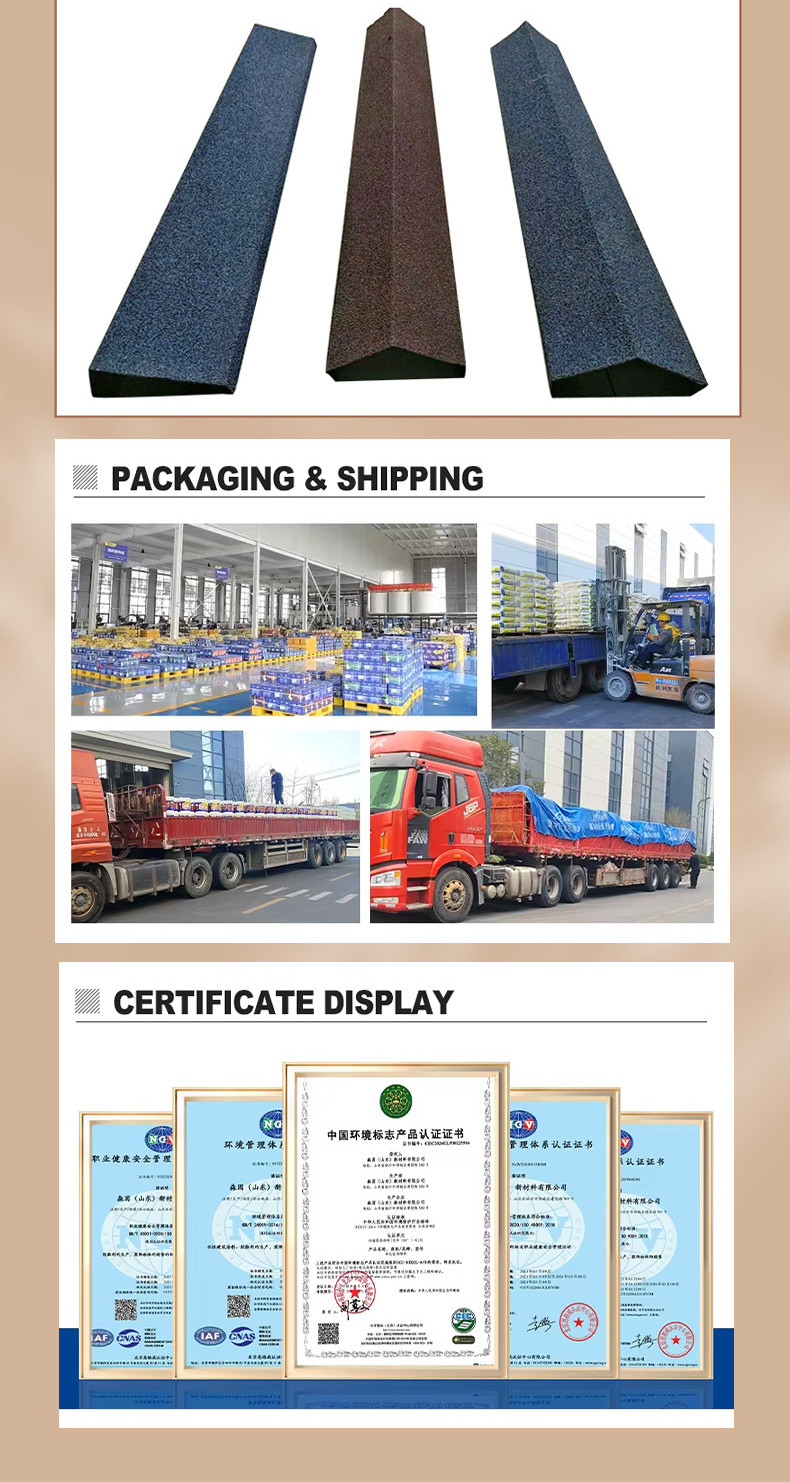
Whether it’s a modern villa, European castle, Chinese courtyard, or industrial loft, stone-coated metal tiles seamlessly blend in. Available in deep gray, reddish-brown, slate gray, coffee brown, and more, they allow for personalized architectural expression.
Product Display
Frequently Asked Questions
Stone-coated metal roofing tiles are premium roofing materials made from high-grade steel sheets coated with natural stone chips. They offer the structural strength of metal combined with the traditional, elegant appearance of stone shingles.
These tiles are highly durable and designed to last 50 years or more with minimal maintenance, significantly outlasting traditional asphalt shingles and wood shakes.
No. The natural stone granule coating acts as an effective sound dampener, absorbing the impact of rain and hail, making them as quiet as any other traditional roofing option.
Yes, their interlocking installation system provides exceptional resistance to strong winds up to Category 12, heavy snow loads, and impact damage from hail.
Yes. The combination of the metal base and stone granules helps reflect solar heat away from the building, lowering indoor temperatures and reducing cooling costs during hot seasons.